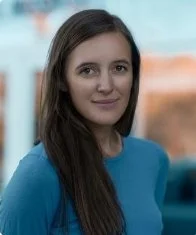
Director Naomi Plasterer: Making Films That Matter
Naomi Plasterer is a software engineer, artist, and athlete. She graduated with a Bachelors of Science in Computer Science and Mathematics from Colorado School of Mines. She has a Master of Art in Animation and VFX specializing in 2D animation from the Academy of Art University. Naomi has worked for Spire Digital, Pivotal Labs, GitHub, Microsoft, Rewatch, and XMTP, and was recently on Lifetime TV. Her athletic endeavors include a hundred-mile races in Alaska in the winter, two-hundred-mile races, big wall rock climbing, and cross-country paragliding. Appreciative of her willingness to do this interview.
Outside of cinema, your day job is android engineer. Never heard of this, so please explain what exactly your duties are?
I usually describe myself more broadly as a software engineer who has worked across a number of platforms and technology stacks, including Android. My job involves designing and building software, writing code, developing mobile apps, connecting systems to APIs, and solving technical problems so that applications run smoothly for users. Growing up, art was always presented to me as something that should remain a hobby while I pursued a more stable career. Engineering ended up becoming a path that allows me to support that creative side of my life. For now, it’s the profession that funds the art, but my hope has always been that one day the art might grow into something that can stand on its own.
At one point, you served as an instructor of Math and Spanish, as well as did volunteer work at a retirement community. With your leap into entertainment, does this leave you less time to teach or offer a helping hand?
Community, volunteering, and giving back have always been core pillars of who I am. I still volunteer weekly at local elementary schools, and I make it a priority to carve out time for that work.
Interestingly, filmmaking has actually opened up new ways for me to volunteer. Sometimes that means helping on very low-budget films, offering animation work, or supporting creative projects that otherwise wouldn’t have the resources to exist. So, while my career path has shifted, the commitment to community has remained constant.
You have a master's degree in Animation. Out of the various types (2D, 3D, hand drawn and stop motion), which are you most proficient in presently? Further, are you fearful of AI's integration into your industry?
My strongest background is in 2D animation, particularly hand-drawn and mixed-media approaches. I am very drawn to styles that feel tactile—ink, watercolor, and line work that carries the evidence of the human hand. As for AI, I think it’s a complicated moment for the industry. Every new tool brings both possibilities and concerns. Personally, I’m most interested in how technology can empower independent artists and small teams rather than replace the creative voice behind the work. Storytelling ultimately still comes from human experience.
Outside of Here Sits, you wrote and directed a project entitled "Where Darkness Grows". Could you elaborate further on the film's synopsis, and can it be viewed anywhere online today?
Where Darkness Grows is a short film about trauma and how it can manifest both emotionally and physically in our lives. At its core, though, it is also about recovery and the idea that even when darkness takes root, healing is possible. The film is available to watch online here: Where Darkness Grows | Videos & Movies on Vimeo
One other item on your impressive list of talents is acting, in which you participated in from 2019-2023. Might you share if the actor in you will someday make a return back onto screen, and if you feel your best work is behind or in front of the camera?
I truly enjoyed my time acting and I still participate from time to time locally in the Reno area. Acting is a craft that requires a tremendous amount of time and dedication, and right now my schedule makes it difficult to commit to larger roles. That said, I still enjoy taking the occasional day-player role when opportunities arise nearby. In many ways acting was an important step in refining my skills as an animator. Animation is essentially acting with a pencil, and physically performing emotions or movements can help you understand how to translate them into animated characters. My long-term goal has always been animation, but acting has been a valuable part of that journey.
So, who knows.... if the right role came along, I would certainly consider returning to it more seriously. At the moment, I am in that funny age range where I’m a little too old to play teenagers but still look too young to convincingly play someone’s mom.
Film Questions:
Here Sits is a three-minute short film that had its Nevada Premiere at the festival. I understand it was written by Stephen George II. Can you elaborate further on how the two of you got partnered up to do this picture?
Stephen and I actually met through the Reno film community. He cast me as an actor in one of his short films, and through that connection we started talking about the possibility of collaborating on a project together. Stephen is an incredibly talented writer who specializes in psychological thrillers. I read several of his scripts, but none of them really connected with me until he sent over Here Sits. The script was originally written as a live-action short, but because the story follows the character from birth to death, the logistics of aging an actor across that entire arc felt like a hurdle. Stephen suggested it might work well as an animated piece, and the first time I read it I could already see the visuals in my head. I knew immediately it was a story I wanted to help bring to life.
I always like to make these interviews somewhat educational, so a question about film budget. You were able to create this animated film for $1,000. Most know that animation is costly, so how did you cut corners so as to stay within budget?
The biggest cost savings came from doing the animation myself. Animation is labor intensive because every second of film is made up of individual drawings, traditionally about twenty-four frames per second. When you stretch that across a three-minute film, it becomes a lot of drawings. We also leaned into a stylistic visual approach that allowed the line work to feel a little rough and expressive. That meant I did not have to spend time polishing every line into a perfectly clean frame. The slightly messy aesthetic actually supports the emotional tone of the film while also making the animation process faster and more manageable for a small production.
With regards to the name Angus, would it fair to assume that the character has this name so as to project his true feelings about the effects of his isolation and abandonment?
As far as I know, Stephen never explicitly explained the reasoning behind the name, so that’s a question I would be curious to ask him as well. It’s an interesting observation though, because the character does carry a quiet emotional tension throughout the story. Whether intentional or not, the name does seem to resonate with the emotional weight the character carries.
We see Angus consistently holding his hand on the glass and shedding tears, yet his parents seem resigned to the consequences of their choice. Why do we not see the after affects of their painful pick?
Because I didn’t write the piece, I can’t speak to Stephen’s full intention, but from my perspective, the story is really anchored in Angus’s experience rather than the parents. The absence of their emotional aftermath is intentional; it mirrors how a child often doesn’t have access to the reasoning or inner conflict of the adults around them. What drew me in was how closely it parallels modern forms of exposure, whether that’s social media or other spaces where children can be put on display for attention without a clear understanding of their needs or consent. The audience, in a way, becomes part of that system, watching, consuming, and wanting more, while Angus remains trapped in that cycle with no agency to step outside of it.
From my perspective, Here Sits centers around how a person's need for attention can many times mean more than affection or adoration. That being a spectacle out shadows the simple wants of life. However, I am not the creator - so could you condense in two sentences what Here Sits is about for you?
For me, Here Sits is about what happens when attention replaces care, and being seen is mistaken for being loved. It is the idea that a life can be shaped, and even given meaning, by an audience, to the point where even in death, what remains is not the person, but the spectacle of them.
To learn more, go to: NPlasterer
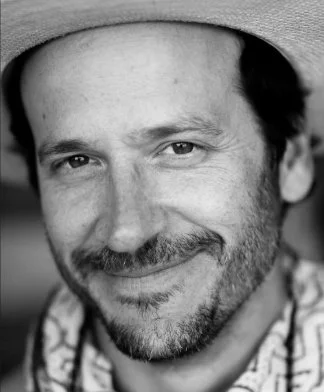
Director Nic Costa Does Film With Flair
I was honestly very humbled that Nic took some time to speak with me about not only his day job, but also his dream profession as film director. We also got to chat about his latest film, Raging Midlife. Read our interview below.
I see that your main occupation is acting as an immigration lawyer. In your opinion, what are the most misunderstood elements of your job? Further, what is the most fulfilling part of this position?
When I read this, I kind of chuckled because sometimes I feel like I am “acting” as an immigration attorney or at least when I started! I think one of the most misunderstood parts of my job is when I literally tell people I am an immigration attorney. They always look at me kind of funny. I was at a market in rural Oregon a while back and some guy says, “an immigration attorney, huh? Are you keeping them here or are you kicking them out?”
I turned to him and I said, “well, I am keeping them here lawfully, sir, you can’t get angry about that.” He then said, “lawfully, huh? Yeah, I guess I can’t get angry about that.” I love these kinds of breakthroughs. I do a lot of asylum and refugee work and it is a common misconception that my clients are coming here “illegally”, but asylum is a lawful path to permanent residence in the country and a pending application grants people lawful presence while they are here waiting for their asylum interview or hearing.
To answer your next question, the most fulfilling part of the job is when you can look a family in the eye and say you don’t have to fear returning to the hell from whence you came. That is as good as it gets.
I think it is super cool that you are a wrestling fan. I can remember being young and watching WWE all the time. How do you feel wrestling has evolved through time, and also, your favorite wrestler?
I was certainly a child of the 80’s. I grew up in what I would describe as the golden age of wrestling pageantry when it was simply the WWF. The good guys were good and the bad guys were bad. It was simple and beautiful, at least in the eyes of a child like me. That is not to say that it was necessarily all good. The 80’s had all kinds of cultural appropriation, and there were many times where the WWF villainized “the other." In fact, Raging Ab's nemesis -- Brooklyn native “Tomahawk Tony” -- was a spin on WWF Hall of Famer "Chief Jay Strongbow" who was an Italian-American dressed in a native American headdress, etc. I never really vibed that women were objectified and slapped around in the 80’s — and I feel like it got worse in the 90’s when the NWO era erupted. Thankfully, I think it has settled into a much better place these days. I see a lot of women participating in WWE. Even guys like Cody Rhodes looks healthy and happy: no anabolic steroids and 80’s cocaine that I can see.
If you have seen Raging Midlife, you may have guessed my favorite wrestler is Macho Man Randy Savage. The guy was just ahead of his time. Watch him on some early Arsenio Hall shows and the Macho was just beyond his contemporaries in terms of elevating the discourse. I will never forget one episode when Arsenal Hall is asking Macho Man if he ever cries and in the next thirty-five seconds, Macho Man just blows our minds (Yes, I have this memorized): “It's OK for macho men to show every emotion available right there, you know. Because I've cried a thousand times [and] I'm gonna cry some more. But, I've soared with eagles and slithered with the snakes and everywhere in between and I'm gonna tell you something right now: there's one guarantee in life and that is that there are no guarantees, yeah. And understand this: nobody likes a quitter. Nobody said life was easy so if you get knocked down take Eight count get back up and fight again and your Macho Man, dig it?”
The man was profound! While Hulk Hogan was telling the kids to say their prayers and eat his trademarked vitamins, Macho was waxing poetic philosophy. I really wanted to channel that in our Raging Abraham Lincoln and his "Five Emancipations" -- 1) Have respect for your fellow man, 2) be good to your folks, 3) stay in school, 4) don't smoke drugs, and 5) don't do the crime unless you're willing to do the time because the time you got might not be much time at all! Fun fact: we actually hired a Macho Man impersonator from Las Vegas named “Motch O Mann” who slayed it. He was a former pro wrestler himself and just understood the magic Macho Man brought to the "squared circle."
You choose to regularly work with your longtime friend and fellow filmmaker, Rob Taylor. Share what you feel makes this working relationship soar. Further, how do you handle any sort of creative challenges?
I met Rob in high school and I remember thinking: "My goodness, this man has no quit in him." When times get tough and there are challenges of any kind, you want someone that will never, ever give up. I have never met anyone more honest and more tenacious and more unwilling to compromise the shot or vision. Rob will walk off set if we are just going to make something inferior. Even if it is hour twelve, he has got to nail it and he does nail it. The best part of working with Rob is the joy it is working with Rob: he is hilarious and just a good, bright beautiful soul. The world could use more of him. I am actually working on a Rob clone right now, but I have not gotten the formula down quite yet. You should see my lab. It is a horror show of Rob Taylor clone misfires, reminiscent of "Alien: Resurrection." Sorry, Sigourney Weaver.
Outside of Raging Midlife, you wrote one other project - Neil Stryker and the Tyrant of Time. How did this experience differ from your latest film - and did you ever distribute the project?
Rob and I actually wrote several scripts in the early 2000’s. Neil Stryker was one of several that made it to production and was actually a prequel to a film Rob developed and distributed on Netflix before Netflix was even Netflix. It’s called Evil Cult. Rob hates when I relay this, but one of the first reviews Evil Cult ever received on Netflix just says “Run. Run as fast and as far away from this “movie” as you can. Evil Cult is not even really a movie; it’s more of an idea…a really horrible idea.” With that glowing inspiration, we made the prequel. Although I was only an actor in Rob‘s first film, we began our collaboration as writers together on Neil Stryker and the Tyrant of Time. One moment that stands out for me during the making of that film, is when I told Rob I wanted my character “Daryl Freeway” to have a musical number very much in the style of a Disney villain. Initially, Rob was skeptical... kind of like how Mel Brooks was skeptical of Gene Wilder when Gene Wilder wanted to do “Puttin' on the Ritz” in Young Frankenstein. I kicked and screamed until Rob said okay, it’s in. I was like "Why did you put me through that?!", and he said, "I just wasn’t sure, but you seemed pretty confident, so, yeah, let’s do it." Subsequently, I put a musical number into Raging Midlife and our forthcoming stage/film project, Predator the Musical: Ain’t Got Time to Glee. Yes -- you guessed it -- a full-blown musical spectacular.
Neil Stryker and the Tyrant of Time is available on Amazon Prime as we speak! We actually made some international headway with that one and I am happy to report that the film got its biggest distribution deal in South Korea (although we never saw a dime from our distributor). You can query Galen Christy over at High Octane Pictures about what happened to all that silver.
Outside of being a writer, you are also an actor. If you were to do a self critique, would you say you are a stronger writer or actor and why?
You know, I am a stronger storyteller than anything else. So, whether that's me sitting down and putting pen to paper or telling a story about my lived experience or performing on stage, I think that is where I really thrive. I don’t love being an actor, but I do like bringing people together in a way that resonates or at least makes an audience chuckle out loud in this dark and dreary world.
Film Questions:
Some of this film was shot during the pandemic, and that is a brave choice to make. Odd to say this, but any real benefits to shooting during this time? Any fears?
You know, there was a lot of good that came from shooting during the height of the pandemic. First of all, it brought our community together to build something when we were being told to stay indoors, masked up and stay away from each other. Moreover, shooting the film in phases was kind of nice, as we were allowed to literally get closer to each other bit by bit (there is wrestling in this film, after all) and spend the breaks in between planning for the next two-week shoot. By the summer of 2022, we were able to organize a final scene consisting of 200+ extras in a giant expo center with Paula Abdul that would not have been possible in the summer of 2020.
The initial concept for this originated in 2003. I know how easy it is for filmmakers to just lose hope or give up - what kept you going?
You know, the original concept was not even about wrestling or a chasing a tank top from a famous wrestler. It was actually a chase for tank top that Kurt Russel wore in Big Trouble in Little China. When I tell people about the original concept, some people laugh and others need an explanation. We quickly realized that the concept was pretty niche. We put the script down for several years until our friend Jeffrey Wonderful, a Portland legend, really put the fire under us in 2018. He was well known for creating rock operas in Portland and it was Jeffrey that pulled me aside and said "Nic, theater is fleeting. Movies are forever. You guys can’t just do Neil Stryker and be done with it. We’ve got business with Fungirl247!"(which was the former title of the film). He actually called it "PartyGirl247", but I never corrected him because that was so Jeffrey Wonderful to make it his own.
It took us ten years to make Neil Stryker and the Tyrant of Time. Raging Midlife took only five years. So, we are getting better! I think what kept us going is that we knew the script was solid, and we knew we were born to play these roles. We wanted to push the envelope and see how far we could go with it. "Let’s get Eddie Griffin! Let’s get Paula Abdul. Let’s get the camera that James Cameron used on the Avatar films!" The project turned into the little film that could... and does. The best part is that it was really fun to do. Yes, it was a tremendous struggle, but the experience and the camaraderie we built were deeply gratifying.
I read that the script was ever evolving, so how and when did you realize that you had to say, we are finished for certain. I know how hard that is for writers to do.
Eventually you got to put the digital pen down because the show must get shot. There are certainly vestiges of the 2003 script in the final film, which I love. We were in our early 20’s when we wrote the first draft, and we were approaching forty when we were writing the final draft. That early sophomoric humor still exists in the final draft but layered with the experience of men and women now in there midlife. Have we really evolved? Certainly, but we are still laughing at those “Boogie Woogies” porn shop jokes we wrote in 2003. Fun note: I remember handing those pages to Walter Koenig who appeared in Neil Stryker as a Russian Science Officer a la Pavel Chekov. His two demands were, number one, he did not want to do the Russian accent like he did in our previous film (made famous in Star Trek). Number two, he wanted his wife, Judy Levitt, to be in the scene with him. So, I basically cut his character "Otis the porn shop owner" in half and gave his wife (who played “Dolores”) half of his lines and a giant double-edged-dildo. Needless to say, she stole the scene from her husband. We dedicated the film to her and Jeffrey Wonderful's memory. This is the last film the couple did together :(
Your film is chock full of campy humor, old school wrestling, kiddy pools and chaos. How hard is it for actors to attempt to stay serious in the midst of such fun set life each day?
I often joke. The worst part of making a movie is making the movie. When we are really feeling the vibe, and the comedy is in a rhythm, it is pure magic. There was a lot of time spent trying to keep it together as Matt Zak is being helicoptered by a 250 pound wrestler while screaming “IT’S REAL!!!”
As to the casting of Eddie Griffin and Paula Abdul, how exactly does a producer go about securing such talent? Secondly, was there ever a real "OMG" moment while working with them?
It started with a script that we wrote and never shot called The Saints of Boozeball. At the end of that script, for no reason at all, I wrote “and then Paula Abdul herself walks up to the roof of the frat house and begins to sing ‘Forever Your Girl’. Rob looked at me and said, "Why are you writing the impossible?". I told him, “Look, if we don’t write the impossible, it will never become possible.” Cut to 2019 and I am telling Rob I know exactly who we need to call to be our lovely “Mary Todd” and he was like "I double dog dare you." I picked up the phone and made the call. Now, there was a number of rewrites that Paula wanted, but I can remember being on that first phone call with her and her team and thinking OMG. Paula Abdul is asking me for a rewrite because she wants her role to have 'meaning and flare'— my six-year-old self was screaming.
As to Eddie Griffin’s involvement, that was a Producer's dream/nightmare scenario. We all flew down to Los Angeles to shoot Paula and the night before we were scheduled to fly down there she must cancel because she has Covid. We lost another actor, Keith David, a couple weeks prior to Covid and we were left scratching her heads, wondering what we were going to shoot on Monday?? I am from Oregon where "Goonies never say die." I switched on my Wi-Fi on the plane and found a Mexican warehouse on Giggster. Found an airport set where they shot Lost, and connected with an agent in New York via my cousin, who handed me a list of actors and said he could probably get Eddie Griffin to LA. However, Nic would have to get him back to his show at the Sahara in Las Vegas that same night. About 8:00am that Monday morning, I remember getting a call from my production staff telling me Eddie Griffin is here - and he wants to know who is playing his son. I was draped in five fake AK-47s thinking "OMG we pulled this off. Yes, I even got Eddie back to his show at the Sahara, which was quickly canceled due to an electrical problem at the venue. It was the greatest producing moment of my life, and my entire team came down with Covid after the shoot because we were celebrating our victory at the Cha Cha Cha in Silverlake.
Raging Midlife had its world premiere at the Austin Film Festival and screened at the Manhattan Film Festival - where is the film headed now?
Yes, we finished the Manhattan Film Festival and then we departed to Cannes for the "World Film Festival: Remember the Future"! We then swing around the planet and back again to festivals in various other states and countries.
You may have noticed we are doing things a bit backwards with distribution and the film festival circuit. The film is already available in the US and Canada on Amazon Prime, YouTube and Tubi, but as Macho Man once said, "The cream rises to the top!" but these days the top is so cluttered we need to push the cream through. We are on a quest for eyeballs. As of this writing, we have 100% on Rotten Tomatoes. That’s no small feat. Now we just got to let the world know it!
More information can be found at: Nic Costa - IMDb
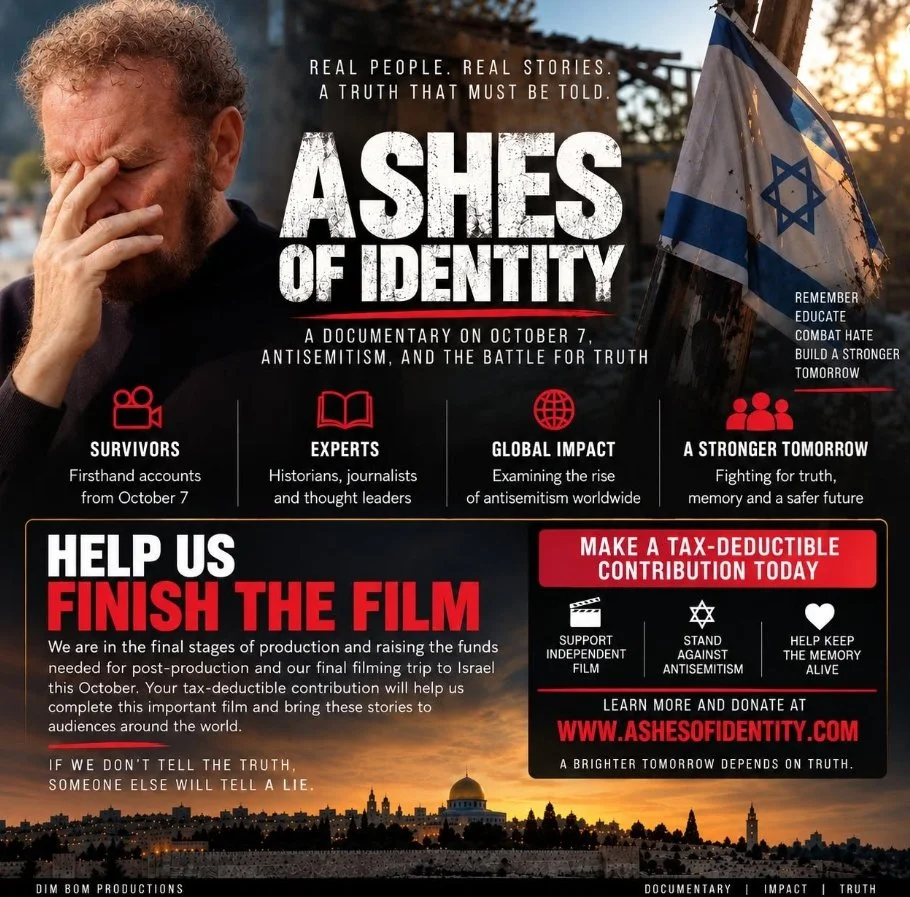
For nearly two years, Filmmaker Eugene Levin has put his heart, time, and resources into making Ashes of Identity. He is finally approaching the finish line, with one last filming trip to Israel this October before moving into post-production. He needs your help to get there. If you believe this film needs to be made, please consider making a tax-deductible contribution. No amount is too small. If you can’t contribute, sharing this post can be just as important. Thank you to everyone who has already stood behind him and this film. It means more to him than you know. If one does not tell the truth, someone else will tell a lie.
Watch the trailer and support Ashes of Identity: www.ashesofidentity.com
ACTOR/PRODUCER RJ MITTE
Roy Frank "RJ" Mitte III is an actor and film producer. He was diagnosed with cerebral palsy at age three. After playing minor roles, he was cast in his breakthrough role as Walter White Jr. On AMC’s Breaking Bad. RJ has advocated for cerebral palsy and other disabilities. He is a SAG spokesman for actors with disabilities, and a celebrity ambassador for United Cerebral Palsy. Finally, he is on the Board of Directors for the Mitte Foundation. More details on RJ are here: RJ Mitte - IMDb. Foundation information is at: https://www.mittefoundation.org
I was thrilled to recently reconnect with RJ at the ReelAbilities Film Festival in NYC. Truly enjoyed this interview: Interview #2 with RJ Mitte - ReelAbilities FF
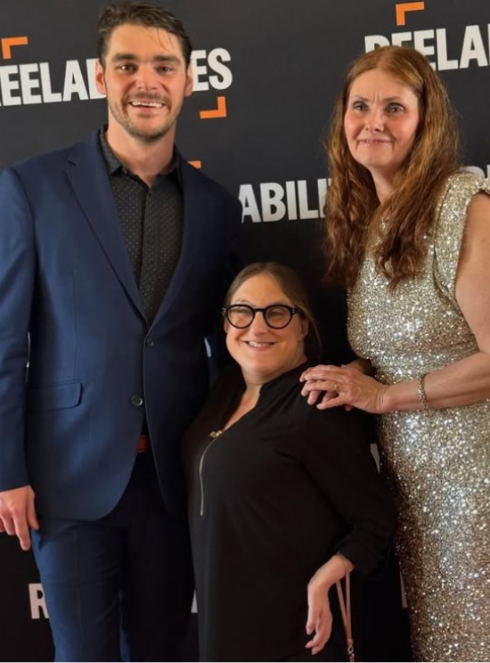
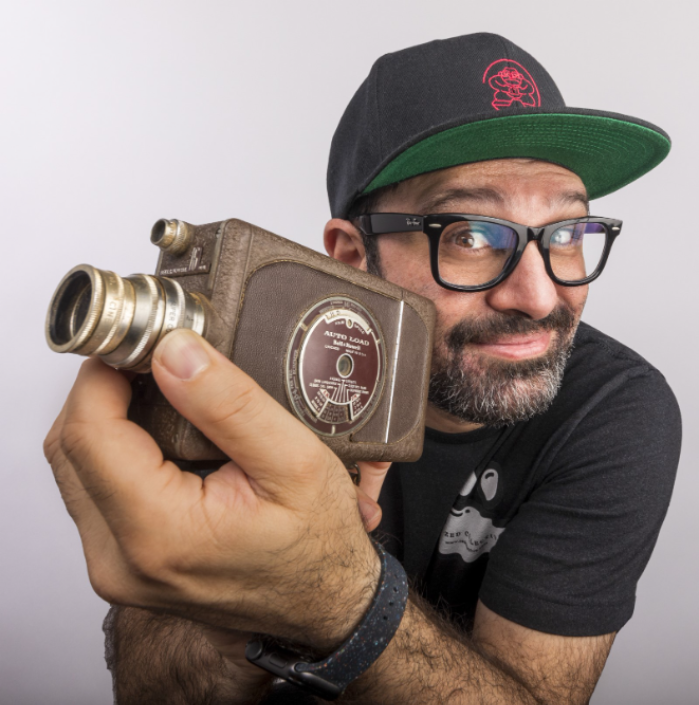
FILMMAKER SHAHAB ZARGARI
Shahab Zargari is an award-winning Iranian-American filmmaker and administrative faculty member of the UNLV College of Fine Arts (including as a member of the UNLV College of Fine Arts Executive Committee), and one of the founding investors in Brass Knuckle Films. After years of creating original short-form streaming content, Shahab made his directorial cinematic debut with the Philip K. Dick adaptation, The Crystal Crypt. His short films have garnered a dozen awards from a variety of prestigious festivals. He continues to hone his craft, creating original films, music videos, and a multitude of commissioned works.
One fun fact about you is that at one point in your past, you filmed a parody of Pulp Fiction. How had the original iconic creation influenced you, and how successful was this short?
That is so funny that you stumbled on that comedy sketch! When I saw Pulp Fiction in High School, it was like a shot of adrenaline! The violence, the mixed-up chronology, all of it. The short did not make it too far, but I think it got a good amount of traction on Youtube!
Many are aware that you work at a university as a thespian, but you also have hosted a podcast. What drew you to this discipline and what subjects were covered on your show?
I have been a part of a few podcasts over the years. This most recent one, Record Revolutions, is a spotlight on the music company my wife and I have been running longer than I've been a filmmaker or University employee! Each episode spotlights a different musical release where my cohost asks me questions about how it came to be, and then we listen to two tracks from that album. The episodes are being recorded and released in chronological order of when the albums were released, starting with our first vinyl release in January of 1999. My hope is that after people hear the two curated tracks that if they end up loving what they hear, they seek out the rest of the album to enjoy.
Had you chosen to study sociology as a possible future career?
My parents are Iranian, and most Iranian parents want their children to grow up to be an Engineering or Medical doctor. I knew I could not hang with either of those majors in college, so I chose Sociology and got my BA in it. Inadvertently, learning about how large masses of humans are swayed by politics, religion, and marketing helped me get to where I am today.
What impact have you made as a teacher that differs from your influence as a director?
Whether you are in a classroom or on set, as a professional - you are a mentor to all of the entry level folks around you, and sometimes without even knowing it. Years later, you can hear about how your mentorship affected someone's life and it is a complete surprise!
You are the Founder of Geykido Comet Records. Please share with my readers what type of content your record label releases, and how has it evolved over twenty-seven years?
In 1998, I took money that was supposed to be for college books, and we released the first vinyl in January of 1999. The label is still going twenty-seven years later, and that is as much a trip for us as anyone else. We do not focus on just one genre but have released a whole plethora of genres: punk rock, experimental, hip hop, bluegrass, folk, and more. The label has grown and shrunk several times over the years, but when Napster and illegal music stealing nearly killed the global music industry, we moved the label back into "hobby" territory. That is because hobbies can never go bankrupt. Nowadays each new album is its own fun project. The latest album is from a new band out of Detroit called Super*user who play emotional and endearing rock-n roll.
You have only written one film (Ruined Earth) and acted in one production (Margaret the Brave). Please share the synopsis of both projects, and will you be pursuing more acting/writing opportunities this year?
I view myself more of a director/editor and not a writer. In 2024, a huge film I was in pre-production on stopped dead in its tracks and so I wanted to do something that had a small footprint, low stakes, and a small crew. Hence, I wrote the script for Ruined Earth and brought it together with three collaborators. The film is an imagining of what will happen to earth once climate change becomes too much to handle. Margaret the Brave is a local Las Vegas film about a divorced father trying to connect with his daughter by telling her a fantasy story about old kings. The film features the fingerprints of nearly everyone who works in the film industry in Vegas. It is a beautiful short film and I hope everyone can get a chance to watch it one day! I played Guard #7 in the medieval scenes. Ha! I won't be pursuing many more acting or writing gigs this year but am working on some narrative and documentary films and hope to premiere those soon!
FILM – BEYOND THE PANE
Beyond the Payne is a three-minute film with heart heavy subject matter. Any particular reason for a short run time with such a sizable topic?
The screenwriter is a doctor in Pakistan. He somehow heard of my work and sent me five unsolicited scripts. Four of them required lots of money and logistics, but the fifth one was only two pages long, with no dialogue and a heavy topic - and I was very intrigued. I told Dr. Singh that I would like to try my hand at that one, and he agreed. In my films, I try to engage in a conversation with the viewer on topics I feel are important, and cycles of abuse in families are definitely something that needs more attention.
Filming in black and white has become a rarity within the film realm. Bravo to you for employing this. How does this choice add to the overall production value of your piece?
Originally this film was supposed to be in color, even though it was shot like an old Universal monster movie. I do adore black and white. I had an issue with color correction between two of the scenes, so making everything black and white not only fixed that but also leaned into the old school horror film vibe.
Did this story initiate from imagination or more of a personal memory?
You would have to ask the screenwriter! My guess is that it is something he thought about as a doctor! Honestly, family discipline, cycles of abuse, and generational trauma are such universal topics that it probably resides in all of our memories!
One of the things that stood out to me were subliminal messages in the film - one being the horror posters. What is one of the primary points that you wanted audiences to pick up on while viewing this production?
Spoiler warning for a micro short, so here we go: The main cutaway for this film, which comes straight from the script, is landing on the broken toy car. The posters, the toys, all of it is to clue you in that despite not seeing a child on screen, there is at least one child that lives in this house. Their life here is not a fun game, but rather a tense dangerous one, with the monster being the abuse of a child the father learned from his own abusive parents. This is a trait the father has taken on and continues with his own child.
Looking to the future, where can interested parties go to see the film - as I know you premiered at the Nevada Women’s Film Festival.
The film is in the film festival circuit right now, and so if you want to possibly catch it on the big screen, head to our screenings page for details: https://thinkspeak.org/screenings/. Once the film has finished its film festival run, we will get it up on YouTube for the world to watch for free! https://www.youtube.com/user/ThinkSpeakGroup. More information on Shahab may be found here: Shahab Zargari's Home on the Web
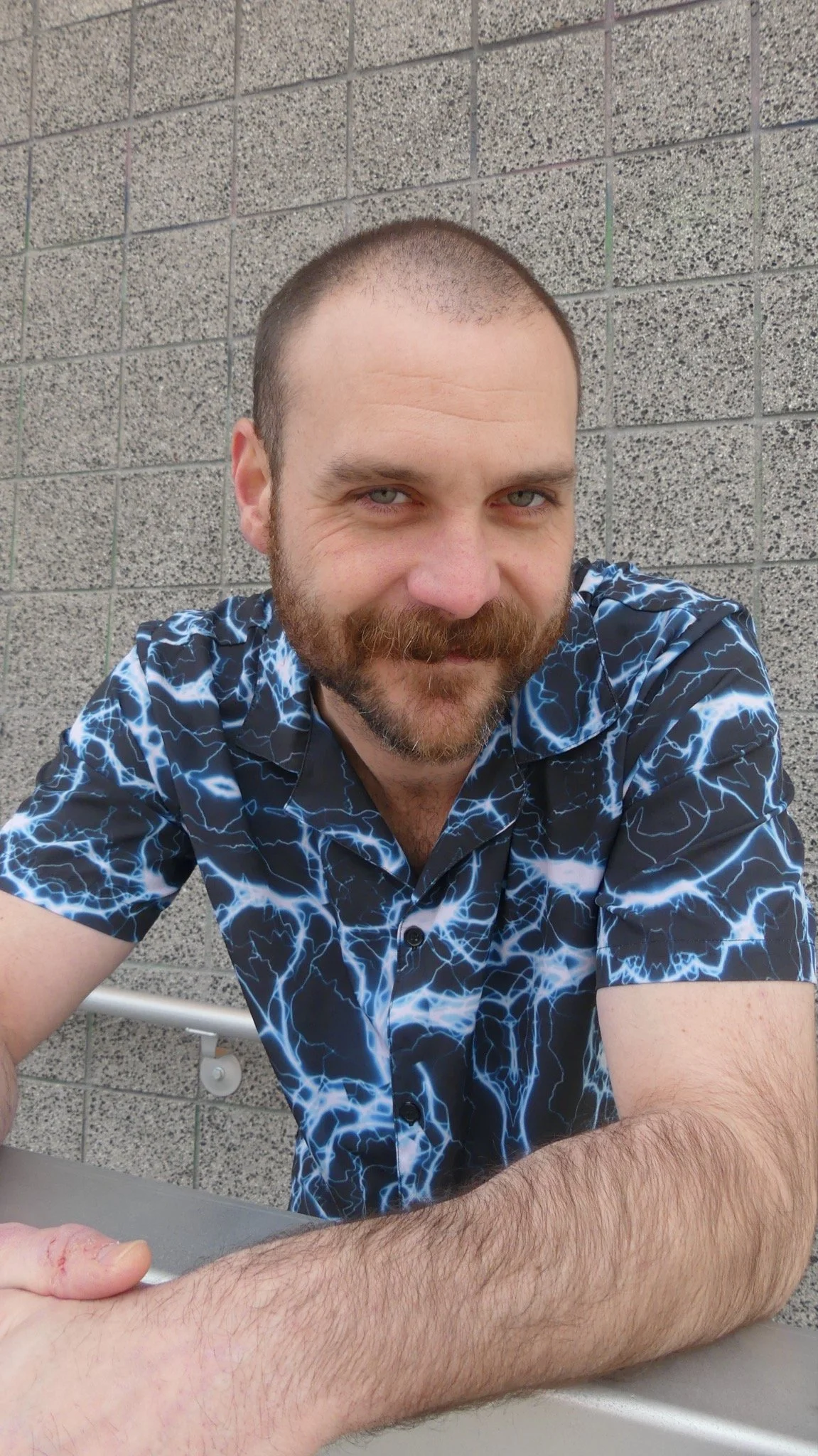
ACTOR DUSTIN MURRAY
Dustin Murray is an American actor best known for his role in the 2024 film Sunny Yard, where he played the character Vernon. This project has been his most prominent recent credit, bringing him recognition in the film industry. He has also been active in Comedy Sportz Las Vegas. Truly had a wonderful time speaking with him about both his past and present endeavors.
To listen to our interview, visit: https://www.youtube.com/watch?v=OFqhJ7YSRqM
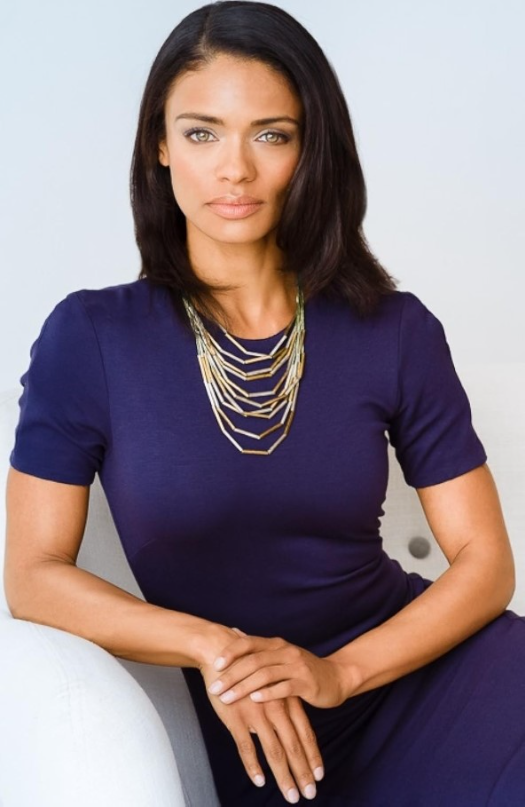
ACTRESS KANDYSE MCCLURE
From romance dramas to supernatural thrillers and beloved franchises, actor Kandyse McClure can do it all. Born in South Africa before moving to Vancouver, McClure is a captivating presence on screen with a career spanning more than 25 years.
Elated and excited to learn more about her marvelous achievements. Our two part interview can be seen here:
https://www.youtube.com/watch?v=_3QTgj1IAV0

INTERVIEW WITH JEFFERSON WHITE AND ADAM VOLERICH
For all of you Yellowstone fans...here is my interview with Jefferson White and Director Adam Volerich about his new film, Drink and Be Merry: Interview with Jefferson White and Director Adam Volerich
Film Link: Watch Drink And Be Merry | Prime Video

AWARD WINNING ACTOR STEPHEN CORRALL
British born Stephen Corrall has portrayed quirky and often lovable TV & film individuals including, The Boatman in the feature film "Guardians of Loch Ness", Lieutenant Laing" in "Shiver Me Timbers" and Mr Godfrey in Prime series "A True Mismatch" He is also known for his portrayal of Peter Smith in the Netflix hit series "The Puppet Master". Theatrically, Stephen is a regular performer at The Edinburgh Fringe and has also been involved in TV commercials with "The Terrance Higgins Trust", "Bright Bus Tours" and "The Scottish Parliament".
He is a drummer and currently plays in a Sex Pistols tribute band. In 2009 he also won an episode of the BBC's "The Weakest Link". Originally from Penzance, Cornishman Stephen now lives near Edinburgh and is married with two sons. More information on Stephen is here: Stephen Corrall - IMDb
Click here to watch our interview: Interview with Actor Stephen Correll